
Omron controllers Distributor | Genuine In-Stock SKUs
Omron Controllers for Reliable Machine Throughput
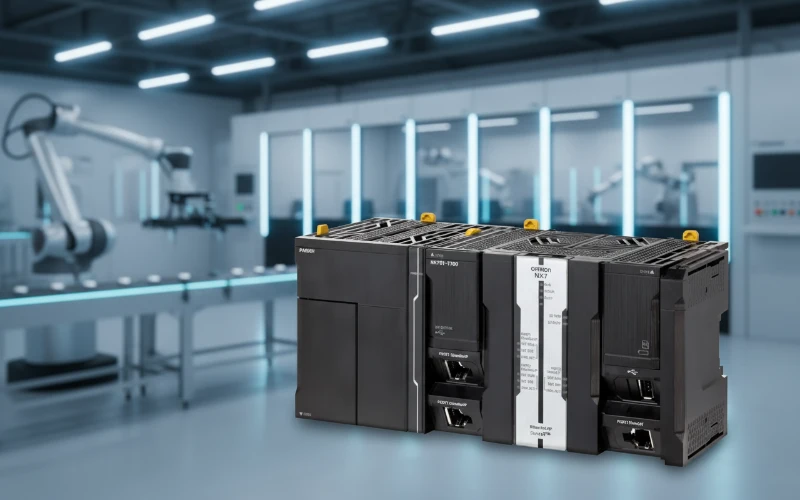
Omron controller families such as CP, CJ, NX, and NJ give you a practical upgrade path from compact control to high-performance Sysmac architectures.
Hengyixin Automation supplies genuine controller stock with application support for I/O planning, communication modules, and replacement matching.
Popular Series and Buying Notes
261 products available in this category.
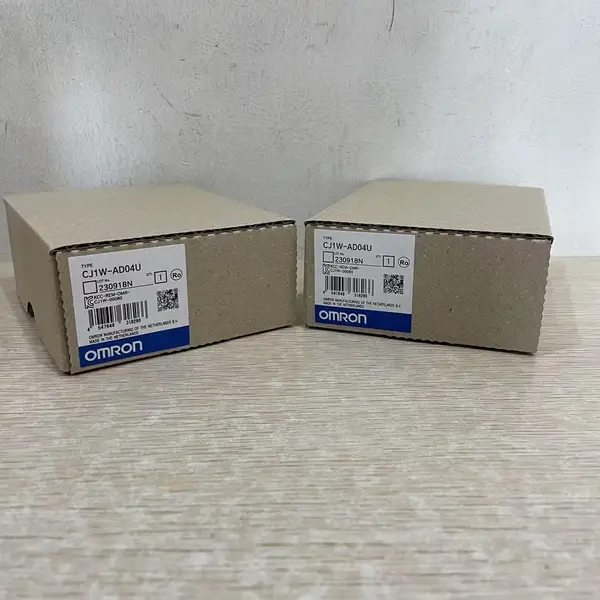
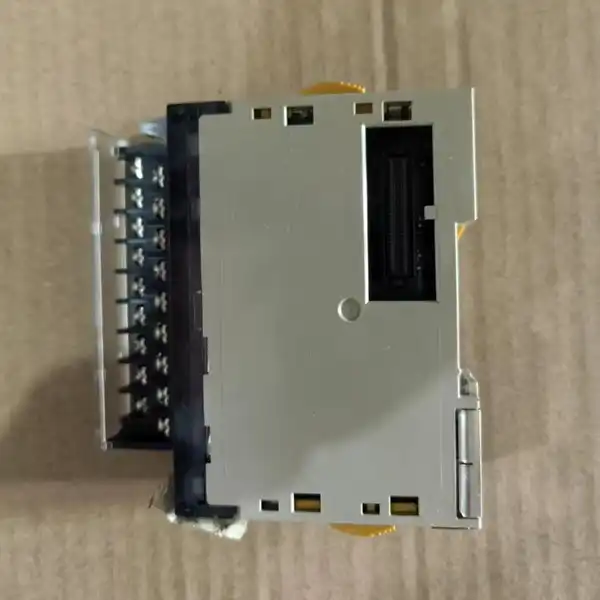
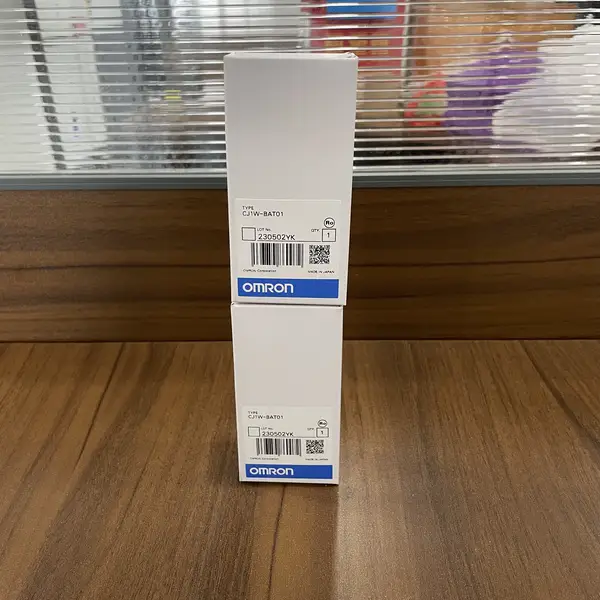
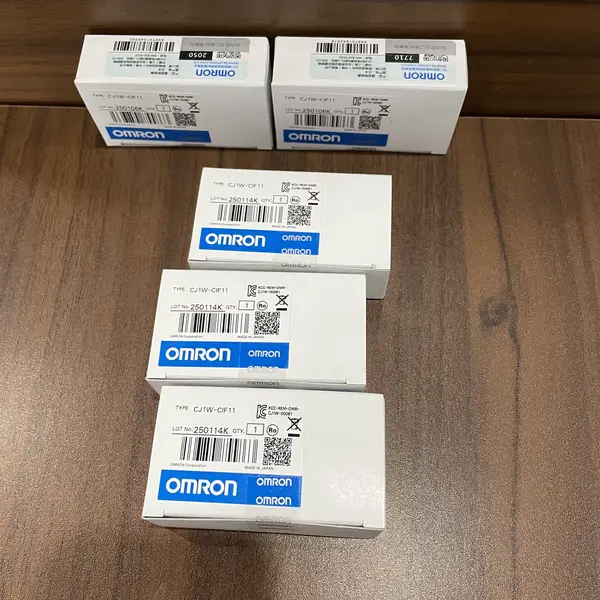
Browse All 12 SKUs in controllers
Why Choose Omron controllers?
Omron's programmable logic controllers deliver unparalleled performance and reliability for industrial automation applications. With advanced features and robust construction, they are engineered for maximum uptime in demanding environments.
- Industry-leading processing speed for real-time control
- Seamless integration with Omron's full automation ecosystem
- Cybersecurity features to protect against modern threats
- Scalable solutions from compact to large-scale systems
- Global support network with local engineering expertise
- Energy-efficient designs with low power consumption
Frequently Asked Questions
What's the difference between CJ2, NX, and CP series PLCs?
CJ2: Modular, high-performance, extensive I/O capacity (up to 4096 points). Best for large systems, complex motion control, or when using existing CJ infrastructure. NX: Machine automation controller combining PLC, motion, and robotics in one unit. EtherCAT-based, ideal for multi-axis servo control and advanced machine applications. CP (CP1E/CP2E): Compact, cost-effective, limited I/O (up to 60 points). Perfect for small machines, standalone equipment, or cost-sensitive applications. Choose CJ2 for large systems, NX for advanced motion control, CP for small/compact applications.
How do I choose between CP1E, CP2E, and CP1L series?
CP1E: Economy series, basic features, limited expansion. Best for simple applications like pump control, small conveyors. CP2E: Enhanced with dual Ethernet ports, faster processing, better connectivity. Ideal for networked machines requiring HMI/SCADA connectivity. CP1L: Discontinued but still widely used, offered more I/O and pulse outputs. For new designs, choose CP2E for Ethernet connectivity or CP1E for basic standalone applications. CP2E's dual Ethernet enables simultaneous HMI and PLC network connections.
What's the maximum I/O capacity I can achieve?
Depends on series: CP1E/CP2E: Up to 60 I/O points (built-in + limited expansion). Suitable for small machines. CJ2M: Up to 2560 I/O points with expansion racks. Ideal for medium to large systems. CJ2H: Up to 4096 I/O points, highest capacity. For very large installations. NX series: Up to 4096 I/O points via EtherCAT couplers. Consider future expansion needs when selecting. It's often cost-effective to oversize slightly for future modifications.
Can these PLCs control servo or stepper motors?
Yes, with varying capabilities: CP series: 1-2 axis pulse output (100kHz), suitable for simple positioning. CJ2M/CJ2H: Built-in 4-axis pulse output or add CJ1W-NC position control units for advanced motion (interpolation, cam profiles). NX series: Best for motion control, supports 32+ axes via EtherCAT with advanced functions (electronic gear, cam, interpolation). For 1-2 simple axes, CP series suffices. For 3+ axes or complex motion, choose CJ2H or NX series.
What communication protocols are supported?
Built-in protocols vary by series: CP2E: Dual Ethernet (Modbus TCP, FINS), RS-485 option. CJ2: Ethernet (FINS, Modbus TCP), plus slot for DeviceNet, CompoNet, EtherNet/IP, PROFIBUS. NX: EtherCAT (standard), EtherNet/IP option. All support Host Link (Omron proprietary) for HMI connection. For multi-vendor networks, CJ2 offers most flexibility. For EtherCAT-based systems, NX is optimal. For simple Modbus networks, CP2E is cost-effective.
Do I need a battery for program retention?
Most Omron PLCs use flash memory for program storage, so programs are retained without battery. However, batteries (optional) preserve: 1) DM area data (recipes, production counts), 2) HR area (retentive memory), 3) Clock data. Battery life: 5 years at 25°C. For applications needing data retention (production counts, recipes), install battery. For programs only, no battery needed. CJ2 and NX series have supercapacitors that retain data for several days during battery replacement.
What programming software do I need?
CX-Programmer: For CP, CJ series. Supports ladder, function block, structured text. Included with PLC or sold separately. Sysmac Studio: For NX series only. Unified environment for PLC, motion, HMI, and vision. More modern interface, better motion configuration. Both support online editing, simulation, and troubleshooting. CX-Programmer licenses are version-specific. Sysmac Studio requires separate license. Consider training costs when selecting platform.