
Omron sensors Distributor | Genuine In-Stock SKUs
Industrial Sensors and Vision Components for Stable Detection
Our sensor portfolio covers photoelectric, proximity, fiber, and measurement devices for reliable detection under demanding industrial conditions.
We help teams select suitable sensing distance, output type, mounting style, and environmental rating to reduce commissioning delays.
Popular Series and Buying Notes
132 products available in this category.
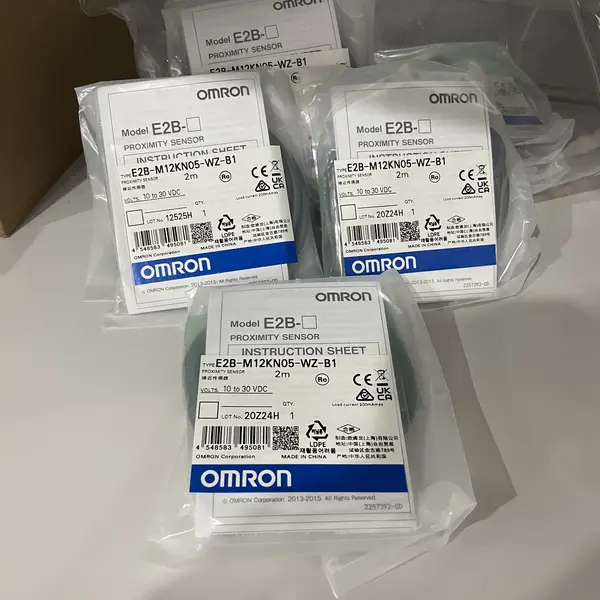
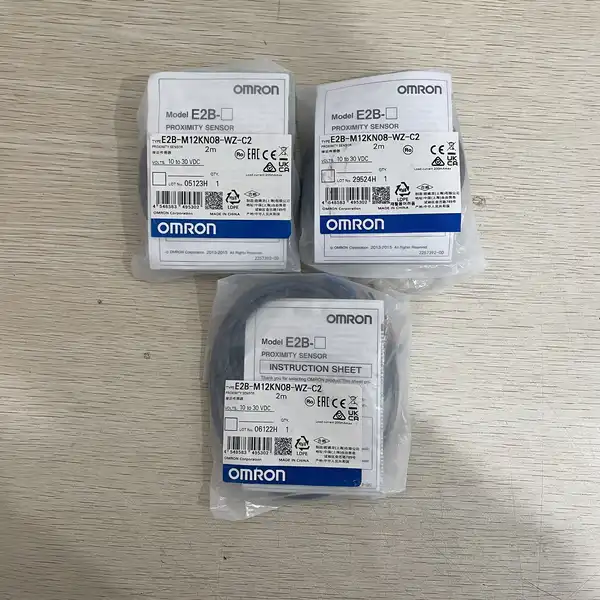
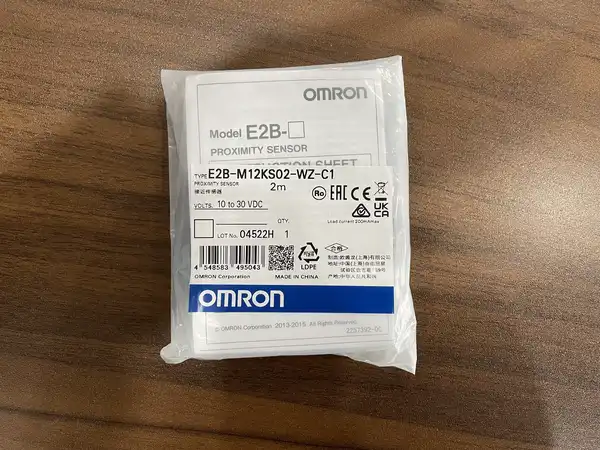
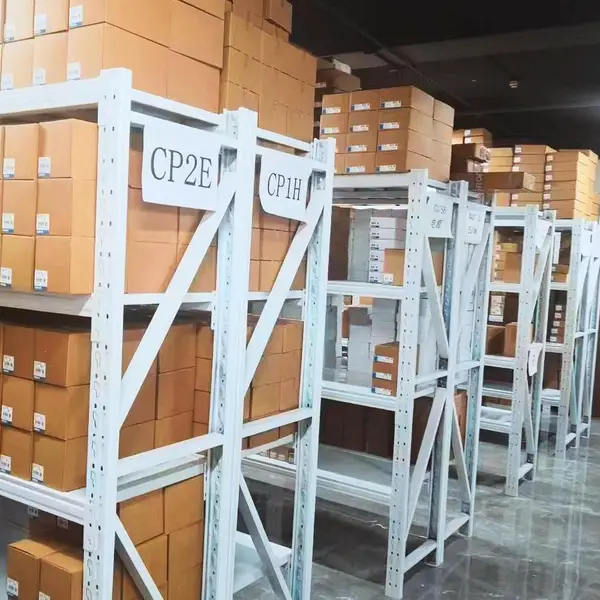

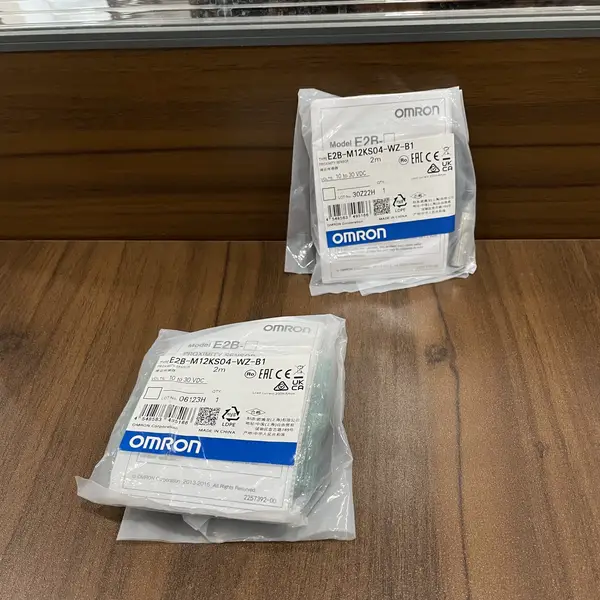
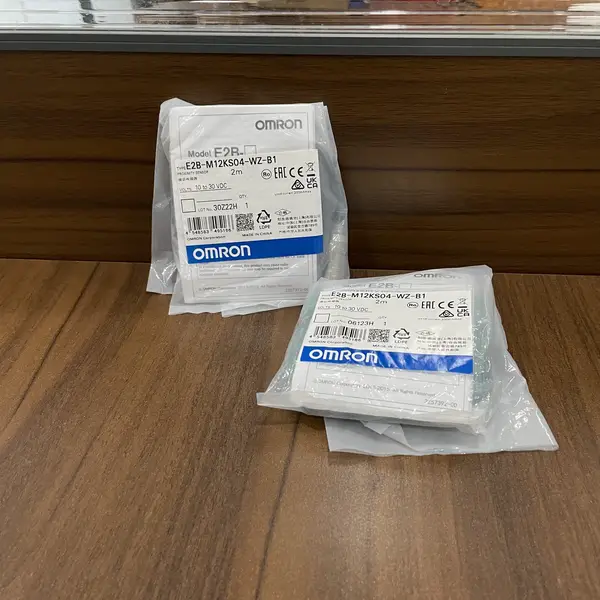
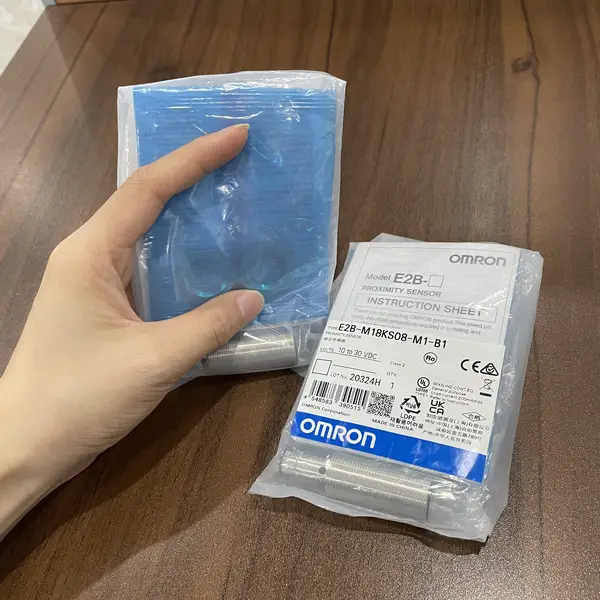
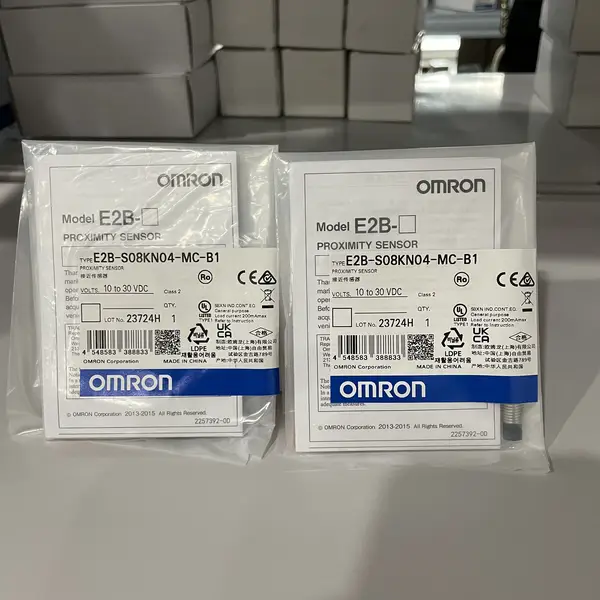
Why Choose Omron sensors?
Omron's extensive lineup of sensors provides high-precision detection and measurement for any application. Engineered for accuracy and durability, these sensors ensure reliable performance in even the most challenging industrial environments, enhancing operational efficiency and quality control.
- Superior detection capabilities for a wide range of materials and conditions
- Robust, IP-rated housings for reliable operation in harsh environments
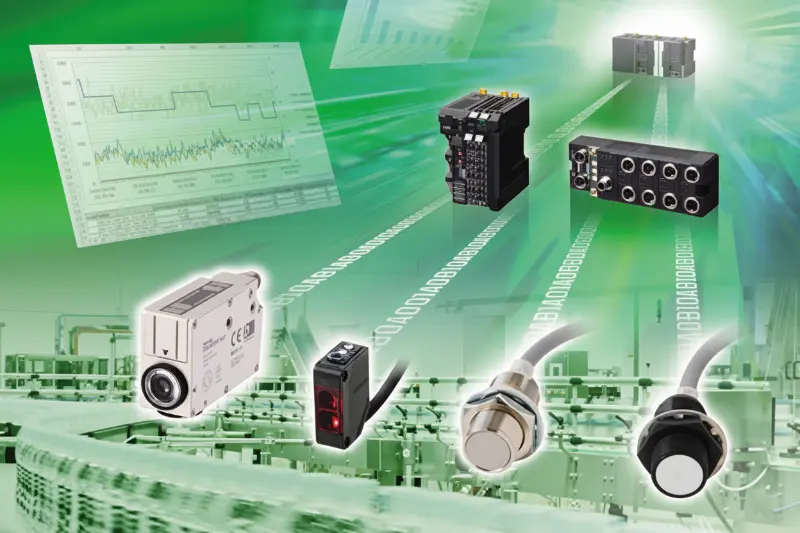
- A diverse portfolio including photoelectric, proximity, fiber-optic, and vision sensors
- Simple installation and intuitive setup to reduce commissioning time
- Advanced diagnostics and IO-Link communication for smart factory integration
- Miniature and compact models for flexible mounting in tight spaces
Frequently Asked Questions
What's the difference between photoelectric and proximity sensors?
Photoelectric sensors use light beams to detect objects at longer distances (up to several meters) and work with any material. They're ideal for detecting transparent objects, labels, or when non-contact detection at distance is needed. Proximity sensors detect metal objects at shorter ranges (typically 2-40mm) using electromagnetic fields. They're more compact, cost-effective for metal detection, and work in dirty environments where optical sensors might fail. Choose photoelectric for longer range or non-metal detection; choose proximity for compact metal detection.
How do I choose between E3Z, E3T, and E3FA photoelectric sensor series?
E3Z: General-purpose, best value for standard applications. Good for most factory automation with sensing ranges up to 5m. E3T: Ultra-compact, ideal for space-constrained installations like small mechanisms or PCB assembly. E3FA: Food-grade stainless steel housing with IP69K rating for washdown environments (food processing, pharmaceuticals). For general factory use, choose E3Z. For tight spaces, choose E3T. For harsh washdown environments, invest in E3FA.
What sensing mode should I use: through-beam, retro-reflective, or diffuse?
Through-beam: Most reliable, longest range (up to 15m), best for small or transparent objects. Requires mounting on both sides. Retro-reflective: Medium range (up to 5m), easier installation (sensor and reflector on same side). Good for most applications. Diffuse: Shortest range (up to 1m), simplest installation (no reflector needed), but affected by object color and surface. Choose through-beam for critical applications, retro-reflective for general use, diffuse for simple presence detection.
Can Omron sensors work in harsh environments like washdown or extreme temperatures?
Yes, Omron offers sensors specifically designed for harsh conditions. For washdown (food/beverage, pharmaceuticals), choose E3FA or E3FB series with stainless steel housing and IP69K rating (withstands high-pressure, high-temperature cleaning). For extreme temperatures, fiber optic sensors (E32 series) operate from -55°C to +80°C. For dirty environments, proximity sensors with IP67/IP69K ratings resist dust and water ingress. Always check the IP rating and operating temperature range for your specific environment.
What's the advantage of IO-Link enabled sensors?
IO-Link sensors provide digital communication beyond simple on/off signals. Benefits include: 1) Remote parameter setting (change sensitivity, timing without physical access), 2) Predictive maintenance (monitor sensor health, contamination levels), 3) Automatic device replacement (parameters stored in master, auto-download to replacement), 4) Detailed diagnostics (exact fault identification), 5) Process data (analog values like distance, contamination level). Ideal for Industry 4.0 applications, reduces downtime, simplifies changeovers, and enables data-driven maintenance.
How do I detect transparent objects like glass, film, or labels?
For transparent objects, use: 1) Through-beam sensors with high resolution (E3Z-LT series) - most reliable method, 2) Retro-reflective sensors with MSR (Mirror Set-up Recognition) function - detects transparent objects by recognizing reflector pattern, 3) Specialized transparent object sensors (E3Z-B series) - optimized for clear materials, 4) Fiber optic sensors with coaxial optics (E32-CC200) - for very small transparent parts. Avoid standard diffuse sensors as they struggle with transparent materials. For labels on transparent backing, use fiber optic or specialized label sensors.
What's the difference between NPN and PNP sensor outputs?
NPN (sinking): Sensor switches the negative side (0V). Current flows from load through sensor to ground. Common in Asian equipment (Omron, Mitsubishi). PNP (sourcing): Sensor switches the positive side (+24V). Current flows from sensor through load to ground. Common in European equipment (Siemens, Allen-Bradley). Match sensor output to your PLC input type. Using wrong type won't work without additional relay. When in doubt, check your PLC manual or existing sensors. Some sensors offer selectable NPN/PNP output for flexibility.