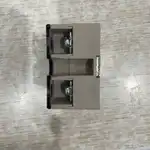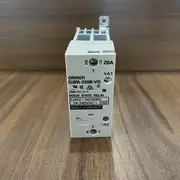
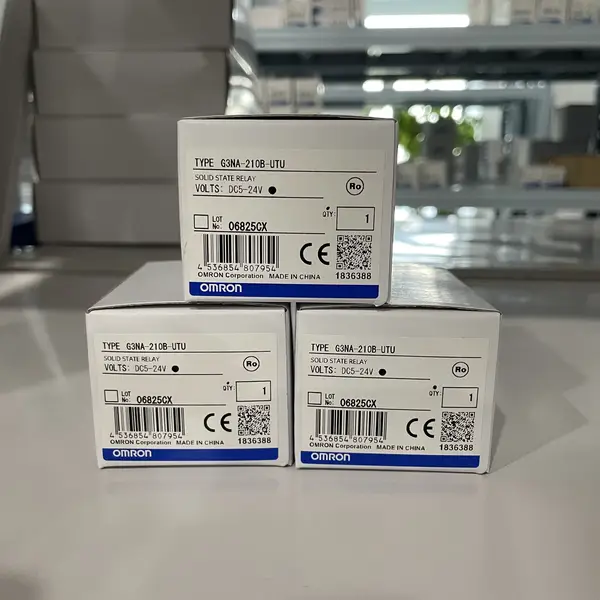
Omron G3NA-210B-UTU DC5-24 — 10 A AC Zero-Cross SSR
SKU: G3NA-210B-UTU DC5-24USD 16.00
Panel-mount solid-state relay with zero-cross switching, 10 A continuous load at 24-240 VAC with heat sink (0.1-4 A without). 5-24 VDC control input, 150 A peak inrush withstand for 1 cycle, screw terminals, UL/CSA/TÜV certified. The AC-output sibling of the already-cataloged G3NA-D210B.
1-Year Warranty
Full manufacturer warranty
Global Shipping
Worldwide delivery available
Genuine Omron
100% authentic product
Ready to Ship
Usually ships within 24h
In Stock
This item is available for immediate shipment from our warehouse.
Contact for pricing, bulk discounts, and shipping
Product Overview
The G3NA-210B-UTU DC5-24 is the AC-output 10 A solid-state relay in Omron's G3NA family — the right pick when you need to switch 24-240 VAC loads (heating elements, lighting, single-phase motor windings, solenoid coils, transformer primaries) at high cycle rate, with no contact wear, no audible clicking, and zero-cross switching that eliminates the inrush current typical of cold heaters and incandescent lamps. The DC5-24 control input accepts 5-24 VDC signals from a CJ-series transistor output (CJ1W-OD211 / -OD212), a CP1E-N20DT-D transistor output, or any PLC sourcing output, with an LED indicator that lights when the relay is energized.
Decoding the G3NA-210B-UTU model number
G3NA = G3NA series Solid State Relay (phototriac output, screw mount, panel-mount); 2 = 200 VAC class load voltage (G3NA-2 = 200 V class); 10 = 10 A load current; B = screw terminals (vs no suffix = PCB pin); UTU = UL/CSA certified AND TÜV certified (the 'TÜV' trailing T is what makes this 'UTU' instead of just 'U'); DC5-24 = 5 to 24 VDC control input range. The full breakdown: G3NA-210B-UTU DC5-24 = 200 V class 10 A SSR, screw terminals, UL/CSA/TÜV, 5-24 VDC input.
Why zero-cross for AC switching — eliminates cold-load inrush
The G3NA-210B-UTU is a zero-cross solid-state relay: it synchronizes the turn-on to the next AC voltage zero crossing (i.e., it waits until the AC sine wave crosses 0 VDC before closing the triac, regardless of when the control signal arrives). This eliminates the inrush current that occurs when a cold heater element or incandescent lamp is switched at AC peak — peak-voltage switching can cause 10-20× the steady-state current for the first 100 ms (a 10 A heater might draw 100 A peak for the first half-cycle if switched at peak). Zero-cross switching keeps the inrush within 1× steady state.
Heat sink requirement
The G3NA-210B-UTU's 10 A continuous rating at 40 °C requires an external heat sink. Without a heat sink, the device can only carry 4 A continuous (the SSR's internal junction-to-ambient thermal resistance, Rth(j-a), is too high to dissipate the I²R loss of higher current). Omron's official heat sinks include the Y92B-N100 (DIN-rail mount, 1.9 °C/W Rth) and Y92B-N150 (panel mount, 1.5 °C/W). For full 10 A continuous at 40 °C, a heat sink with Rth ≤ 2.0 °C/W is needed.
Key Features
- G3NA-series panel-mount solid-state relay
- Zero-cross switching
- Phototriac output
- Load voltage range 24-240 VAC
- Load current 0.1 to 10 A continuous
- Load current 0.1 to 4 A without heat sink
- Non-repetitive inrush current 150 A peak for 60 Hz / 1 cycle
- VDRM 600 V
- SKU: G3NA-210B-UTU DC5-24
- Series: G3NA Solid State Relays (panel-mount, AC zero-cross output)
- Voltage: 200 VAC
- I/O: 1 I/O
Best-Fit Applications
- Process-heater control on a plastics-extrusion line — CJ1W-OD212 PNP sourcing output drives the G3NA-210B-UTU DC5-24 control input; the AC output.
- Incandescent / halogen lamp dimming stage on a food-warming display cabinet — G3NA-220B-UTU 20 A switches 230 VAC halogen lamps.
- Solenoid valve driver on a packaging-machine pneumatic manifold — G3NA-210B-UTU switches 24 VAC solenoid coils for process valves; for 115.
- Commercial-coffee-machine boiler element switching — G3NA-220B-UTU 20 A switches a 3 kW 230 VAC boiler heating element from a CJ1M-CPU13.
Buying Checklist
- Pick G3NA-210B-UTU DC5-24 for 10 A AC zero-cross SSR with 5-24 VDC control — when you need AC switching up to 10 A
- Pick G3NA-205B-UTU DC5-24 for 5 A AC version — for lighter loads like indicator lamps, small solenoids
- Pick G3NA-220B-UTU DC5-24 for 20 A AC version — for high-current heaters, motors, transformers up to 20 A
- Pick G3NA-240B-UTU DC5-24 for 40 A AC version — for high-current process heaters up to 9 kW 230 VAC single-phase
- Pick G3NA-D210B-UTU DC5-24 for DC-DC switching — for 5-200 VDC loads instead of AC
- Pick G3NA-210BL-UTU DC5-24 for NON-ZERO-cross AC switching — for inductive AC loads like transformer primary or small AC motor windings where zero-cross fails to latch
Technical Specifications
| Model | G3NA-210B-UTU DC5-24 |
|---|---|
| Series | G3NA Solid State Relays (panel-mount, AC zero-cross output) |
| Type | Zero-cross solid state relay, AC output, screw terminals |
| Output Configuration | 1-pole, normally-open (SPST, zero-cross turn-on) |
| Rated Load Voltage | 200 VAC class (24 to 240 VAC operating range) |
| Operating Voltage Range | 19 to 264 VAC |
| Rated Load Current (with heat sink at 40°C) | 0.1 to 10 A continuous |
| Rated Load Current (without heat sink at 40°C) | 0.1 to 4 A continuous |
| Inrush Current (1 cycle, 60 Hz) | 150 A peak (non-repetitive) |
| VDRM (Peak Repetitive Off-State Voltage) | 600 V (reference value) |
| Output Element | Phototriac (no moving parts) |
| Control Input Voltage | 5 to 24 VDC |
| Operating Input Voltage Range | 4 to 28 VDC |
| Pickup Voltage | 4 VDC max |
| Dropout Voltage | 1 VDC min |
Resources & Downloads
FAQ for G3NA-210B-UTU DC5-24
Can the G3NA-210B-UTU DC5-24 switch DC loads like a 24 VDC solenoid?
No — the G3NA-210B-UTU is for AC loads only. The internal triac requires AC voltage reversals (zero crossings) to break the circuit when the control signal is removed. On a DC load, the triac would latch ON permanently once activated, because DC has no zero crossing — meaning the load stays energized even after the control signal is removed, potentially causing equipment damage or fire.
Why is a heat sink required for the G3NA-210B-UTU at 10 A?
The SSR's triac dissipates power during conduction (typically 1.6 V × load current = 16 W at 10 A). Without a heat sink, the only cooling is natural convection off the SSR's metal base — sufficient for 4 A (6.4 W loss) but inadequate for 10 A. The internal triac junction would reach 125 °C at 10 A without a heat sink, exceeding the 125 °C Tj(max) rating within 30 minutes of operation.
What's the difference between G3NA-210B-UTU and G3NA-210BL-UTU?
Both are 10 A 200 V class SSRs with screw terminals, but they differ in switching behavior: G3NA-210B-UTU (this SKU) is zero-cross — it synchronizes turn-on to the next AC voltage zero crossing after the control signal is received, eliminating inrush on cold heater loads. G3NA-210BL-UTU is non-zero-cross (or 'random phase') — it turns on immediately when the control signal is received, regardless of where the AC sine wave is.
What cable wire size does the G3NA-210B-UTU accept?
The G3NA-210B-UTU M3.5 screw terminals accept up to 8 mm² / AWG 8 wire (cross-section), which corresponds to maximum 50 A continuous current at 600 V in standard panel-wiring practice. For a 10 A continuous load, the minimum recommended wire size is 2.5 mm² / AWG 14 (16 A rated) — using larger wire than minimum is acceptable but adds cost and effort.
Similar Products
Explore related Omron models often viewed alongside this product.