
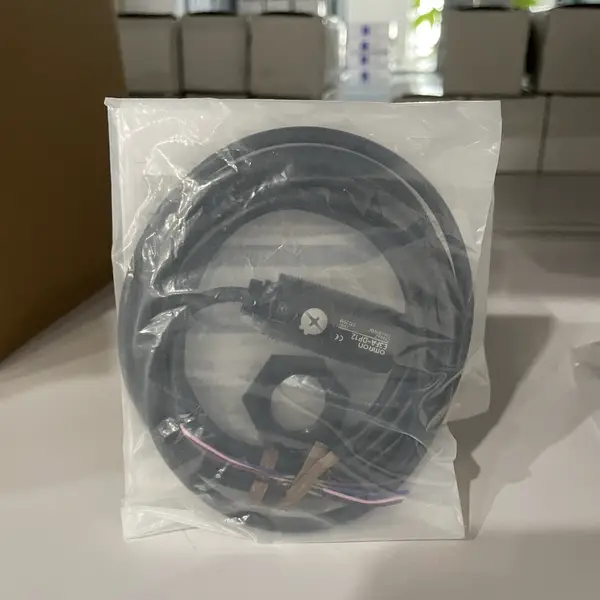
Omron E3FA-DP12 — 300 mm Diffuse Photoelectric, PNP
SKU: E3FA-DP12USD 10.00
M18 ABS plastic diffuse-reflective photoelectric sensor, 300 mm sensing range, PNP Light-ON/Dark-ON, red LED, pre-wired 2 m PVC cable, IP67/IP69K.
This item is available for immediate shipment from our warehouse.
Contact for pricing, bulk discounts, and shipping
Product Overview
The E3FA-DP12 2M is a mid-range diffuse-reflective photoelectric sensor in Omron's E3FA family — an 18 mm-threaded ABS plastic barrel with a 300 mm sensing distance, red LED emitter, and PNP switching output. Unlike the E3FA-DP11 (100 mm range), the DP12 targets longer-distance detection of larger objects on conveyors, pallet entry/exit points, and case-pack stations where the sensor must read a part or assembly from 30 to 30 cm away. The 'D' in the model indicates diffuse-reflective (no separate reflector or receiver — the sensor reads the light reflected back from the target itself), 'P' is PNP output, and '12' is the 300 mm range in the E3FA naming convention.
Diffuse sensing pitfalls at 300 mm range
Diffuse-reflective sensors at 300 mm range are sensitive to target colour, surface finish, and angle. White paper (the calibration target) gives the rated 300 mm; a black rubber target may drop to 50–100 mm; a shiny chrome-plated cylinder at a glancing angle can reflect the beam away from the sensor entirely. The Omron datasheet gives spot size 40 × 50 mm at 300 mm sensing distance — make sure the target is at least that wide, or the beam will miss.
E3FA-DP12 vs E3FA-DP22 and E3FB-DP22
Inside the E3FA family: DP11 (100 mm pre-wired), DP12 (300 mm pre-wired — this SKU), DP13 (1 m pre-wired); the matching M12-connector models are DP21 / DP22 / DP23 (suffix 2 = M12 connector). Bypass the M12 connector only if you genuinely need quick disconnect — the pre-wired -12 (this SKU) is usually cheaper and more reliable in washdown environments because there is no connector joint to leak. Compare against the E3FB-DP22 in the brass-housed family: identical sensing behaviour but a nickel-plated brass body rated to IP67/69K for chemical cleaning — pick the E3FB-DP22 for meat-processing lines, pharmaceutical CIP washdown, or any environment where plastic housings crack under aggressive detergents.
Key Features
- M18 threaded ABS plastic barrel, IP67/IP69K rated for high-pressure washdown
- 300 mm diffuse-reflective sensing distance
- Red LED emitter, visible for easy alignment during commissioning
- PNP output, Light-ON/Dark-ON mode switch selectable
- Pre-wired 2 m PVC cable
- 0.5 ms response time, suitable for conveyors up to ~200 parts/min
- Operating temperature -25 to +55 °C, oil-resistant cable jacket
- Built-in sensitivity adjustment via 18-turn potentiometer behind cover
- SKU: E3FA-DP12
- Series: E3FA (Cylindrical, Straight, Plastic)
- Voltage: 10 TO 30 VDC
Best-Fit Applications
- Carton presence/absence detection on case-packing conveyors at end-of-line packaging lines
- Pallet entry/exit verification at automatic stretch-wrapper or palletiser in-feed
- Large part detection on assembly transfer conveyors where the part is 30 cm below the sensor mount
- Tote-bin overflow detection at warehouse pick-and-pass induction zones
Buying Checklist
- Pick the E3FA-DP12 for 300 mm diffuse PNP pre-wired — typical mid-range conveyor detection
- Pick the E3FA-DP11 for shorter 100 mm range
- Pick the E3FA-DP13 for longer 1 m range
- Pick the E3FA-DP22 for an M12 connector at the same 300 mm range if quick disconnect is required
- Pick the E3FB-DP22 if the environment is chemical washdown — nickel-plated brass vs ABS plastic housing
- Pick the E3Z-D82 if mounting depth is critical — the E3Z rectangular body fits in tight machine pockets
Technical Specifications
| Model | E3FA-DP12 2M |
|---|---|
| Series | E3FA (Cylindrical, Straight, Plastic) |
| Sensing Method | Diffuse-reflective |
| Sensing Distance | 300 mm (white paper 300 × 300 mm calibration target) |
| Spot Size | 40 × 50 mm at 300 mm distance |
| Output Type | PNP open collector |
| Operation Mode | Light-ON / Dark-ON selectable |
| Light Source | Red LED, 624 nm (visible) |
| Supply Voltage | 10 to 30 VDC (24 VDC nominal) |
| Current Consumption | ≤ 25 mA at 24 VDC |
| Load Current | ≤ 100 mA |
| Operating Temperature | -25 to +55 °C (no icing) |
| Certifications | UL, CE, UKCA |