
Omron relays Distributor | Page 5 of 5
Reliable Omron Relays for Panel Control and Switching
Our relay lineup includes plug-in, power, and interface relays for dependable switching in control cabinets and machine panels.
We assist with coil voltage, contact configuration, and socket/accessory selection to avoid procurement mismatches.
Popular Series and Buying Notes
50 products available in this category.
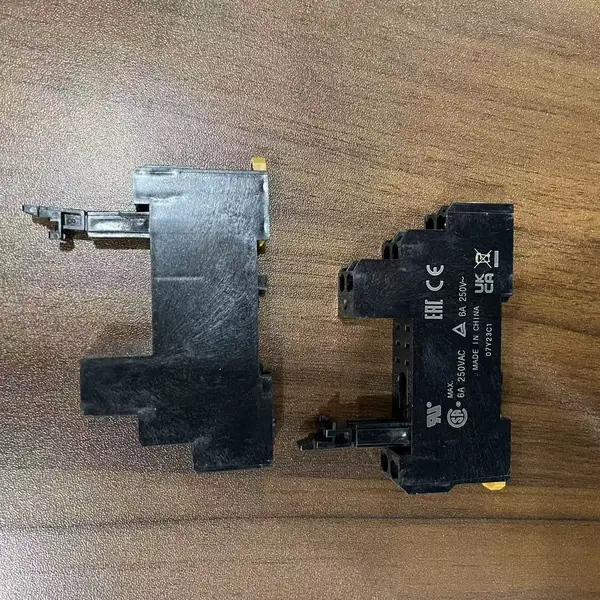
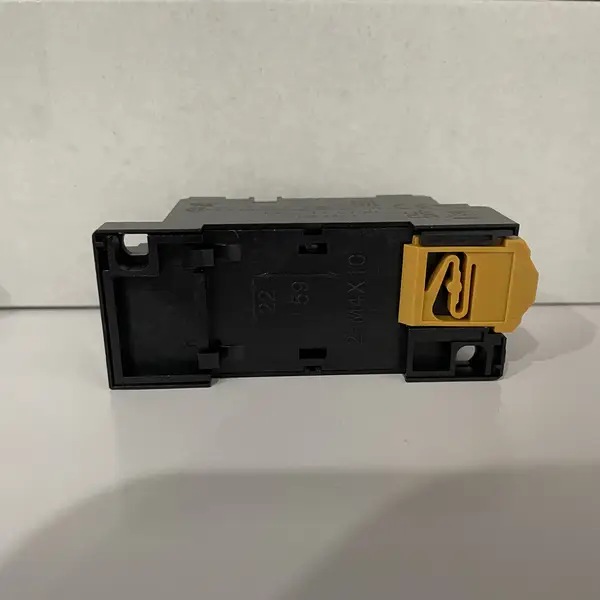
Browse All 2 SKUs in relays
Why Choose Omron relays?
Omron relays are the industry benchmark for quality and reliability in switching applications. With a vast portfolio ranging from PCB signal relays to high-power industrial units, they offer a trusted solution for circuit protection, signal isolation, and load switching in any design.
- Extensive lineup including general purpose, solid-state, power, and signal relays
- Engineered for high reliability with a long mechanical and electrical service life
- Compact and miniature designs to maximize board and panel space
- Low power consumption models for energy-efficient systems
- Global standards compliance for universal application and integration
- Push-In Plus terminal technology available for quick and secure wiring
Frequently Asked Questions
When should I use a solid-state relay (SSR) vs. electromechanical relay?
SSRs: No moving parts, infinite mechanical life, silent operation, fast switching (ms), zero-cross switching reduces inrush. Ideal for: heating control, frequent cycling, noise-sensitive environments. Drawbacks: Higher cost, heat generation, leakage current. Electromechanical: Lower cost, visible contact gap, can switch AC/DC, higher current capacity. Ideal for: general control, infrequent switching, cost-sensitive applications. For heater control or high-cycle applications, SSRs pay for themselves in reliability.
What's the maximum switching frequency for relays?
Electromechanical relays: Resistive loads: Up to 1800 operations/hour. Inductive loads (contactors, solenoids): Reduce to 600 operations/hour. Higher frequency causes: contact wear, reduced life, potential welding. For higher frequency: Use SSRs (no mechanical wear), or derate contact current. Check datasheet for specific ratings. For cycling applications (temperature control, level control), SSRs are recommended despite higher initial cost.
Do I need flyback diodes for relay coils?
DC coil relays: Yes, always use flyback diodes or RC snubbers when switching DC coils with PLC/solid-state outputs. Prevents voltage spikes that can damage output transistors. AC coil relays: Use RC snubbers for same reason. Many Omron relays (G2R, G6B) have built-in diodes for DC coils (indicated by model suffix). Check relay specifications. PLC relay outputs can switch coils directly; transistor outputs require protection.
What's the difference between contact ratings for resistive and inductive loads?
Resistive loads (heaters, incandescent lamps): Full contact rating applies (e.g., 10A at 250VAC). Inductive loads (contactors, solenoids, motors): Derate to 30-60% of resistive rating. AC-15 rating (inductive): Typically 3A for a 10A relay. Reason: Inductive loads cause arcing when interrupted, accelerating contact wear. Always check AC-15 or DC-13 ratings for inductive loads. For motor loads, consider motor-rated contactors instead of general-purpose relays.